
Word Count
975 words, 5 minutes read time
CliffsNotes version of the Lincoln story
The story of the Lincoln Theatre unfolds in 4 acts spanning a century. This is a summary of the setting, actors, conflicts and their resolution. Link to an extended posts follows of the Acts and Scenes.
Act I: Lincoln Theatre Opens (1925-27)
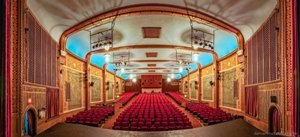
The Lincoln Theater opened to great fanfare on April 21, 1926. The building included the Mighty Wurlitzer Organ™ built into the front of the house. The building and organ far surpassed the other silent movie houses in Mount Vernon and the rest of Skagit County.
The Lincoln was built by Elden W. Pollock. He sold his Seattle business and decided to build a theater and office building on the site of his wife’s family home. The Halberg brothers from the Lincoln Theater in Port Angeles leased the theater space.
Operators of a regional theater chain that included all theaters in Mount Vernon, Anacortes, and Stanwood resisted the opening of the new competitor, the Lincoln.
Act II: Exhibitor Ives Upgrades then Loses the Lincoln (1927-33)
In March, 1927 Waldo Ives and his father Wilbur bought out the remaining 14+ years of the Lincoln lease as well as the furnishings and projector. Waldo now operated all theaters in Mount Vernon and the Empire in Anacortes.
The Ives invested in the first blade sign on the theater in 1928, and less than a year later in the equipment necessary to show talkies, beating the new Paramount theater (Lido as of 1953). The Lincoln’s first talkie was “In Old Arizona,” shown in February 1929.
After the stock market crash of October 1929 and the slide into the Depression the Ives fell behind in their rent of the Lincoln and handed the keys back to landlord Elden W. Pollock and the Lincoln went dark.
Act III, Scene 1: Rising to Ruling (1933-53)
The Ives immediately reopened the dark Mission (Lyric as of 1953) and began refurbishing the Paramount reopening it in 1933 as the Roxy (Lido as of 1953). As the economy recovered from the depths of the Depression Mount Vernon supported two theaters engaged in fierce competition.
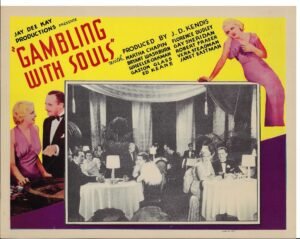
In October 1937, Waldo Ives’ Roxy (Lido as of 1953) showed a lurid film, ”Gambling with Souls.” There was community outrage, seemingly silenced when the Pollocks purchased Waldo Ives’ theater furnishings loan and evicted him. The theater was refurbished and reopened as the Lyric (Lido as of 1953). It retained that name until 1952, when a new operator leased the building and reopened it as the Lido, a name it carried for another 40 years. The Pollocks shifted the Lyric name to the Mission Theater.
The Lincoln became the flagship theater of a regional movie chain which at various times included the Mission (Lyric as of 1953), and the Lyric (Lido as of 1953), a drive in movie theater (site of the current Target store in Burlington), and part interest in theaters in Snohomish and Bothell. In addition to films Lincoln and sibling theaters in Mount Vernon participated in and sponsored fashion shows, children’s matinees advertised as support for adult shopping in downtown Mount Vernon shops, and any number of promotions that would not be allowed today.
Act III, Scene 2: Fall from Ruling (1953 – 84)
In late 1952 Elden D Pollock lost the lease to the Lyric (Lido as of 1953). Elden D Pollock moved the Lyric name to the Mission Theater when he lost a bid to operate the original Lyric, which was reopened as the Lido in 1953. Competition between theaters and with TV began.
By the late 1970’s retail began moving north out of downtown Mount Vernon to early shopping malls along College Way and Riverside Drive. As part of the migration two multiplex theaters were built off College Wa. A month after the second, a 5 plex, went live in 1984 the Lincoln exhibitor closed his operation. A third generation of Pollocks began operating the Lincoln, hosting local country acts, beauty pageants, and other live events.
The new manager supported a volunteer group of dedicated theater organ aficionados were restoring the Wurlitzer theater organ. Those volunteers and their restoration played a pivotal role in the saving of the rundown, leaky Lincoln from a fate of being repurposed.
Act IV – The Comeback (1984 – Present)
In 1986 John and Gretchen Pickett bought the Lincoln Theater. The fate of the Lincoln hung in the balance. Would it go the way the Lyric, conversion to a furniture store?
An impromptu concert on the Mighty Wurlitzer and a walk through of the entirety of the Lincoln convinced Ms. Pickett that the Lincoln had value as an active theater. She toured other historic theaters in the state and came away with a plan built on their experience.
Mrs. Pickett and a group of volunteers got the Lincoln and adjacent office building on the state and national registries of historic buildings. They set up the Lincoln Theatre Center Foundation as a non-profit that same period to operate the theater. Grants, contributions, and volunteer labor were used to repair the roof, wiring and infrastructure as well as refurbish the interior while adhering to the historic design.
As the Lincoln rounded into form during the decade of the 1990s, annual attendance grew from 4,000 to 40,000. Programing was a mix of classic and foreign films and live acts – local, national, and international.
The Picketts sold the Lincoln and storefronts to City of Mount Vernon in 2001. The city signed a new 25 year lease with the Foundation. Five years later, In 2006, a new mayor proposed that the city sell the theater. Community support was marshalled and the proposal was withdrawn.