732 words, a 3 to 5 minute read
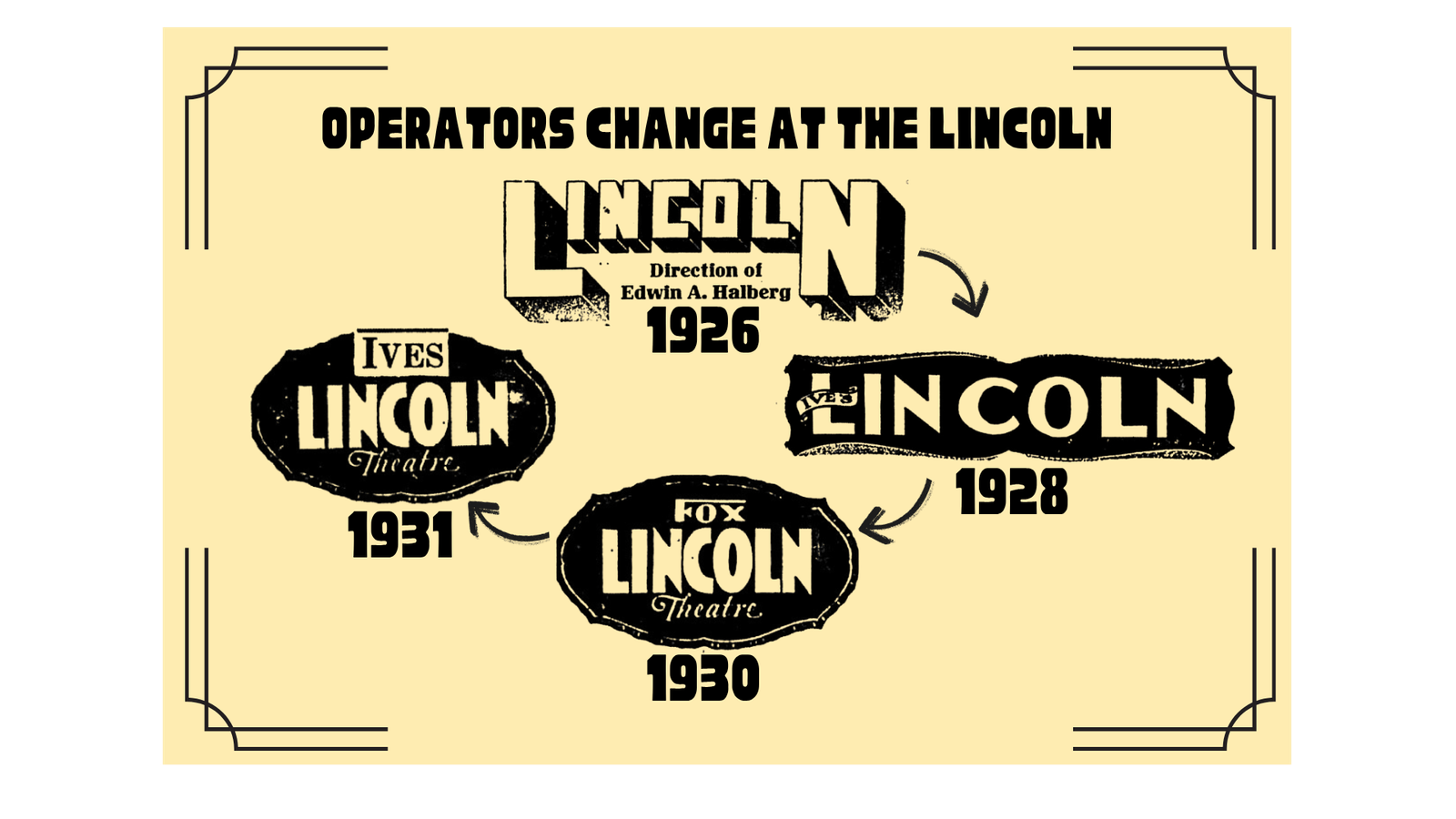
The Ives, Wilbur the father, and Waldo his son bought their way into the Anacortes and Mount Vernon movie markets. They invested in neon blade signs and projector and sound system upgrades for the Lincoln and Empire, fending off Paramount Studios theaters in both towns. The stock market crash of October 1929 followed by banking crises and increasing unemployment led to Waldo Ives turning the Lincoln over to the owner, Elden W Pollock while he reopened the Mission (Lyric as of 1953).
In March 1927 Waldo Ives and his father Wilbur bought out the Halbergs’ lease to operate the Lincoln, assuming the $425/month rent that was negotiated for the 1926 opening. Ten months of operation the Halbergs almost tripled their investment in the theater fittings and returned to their original Lincoln theater in Port Angeles .
Coincidentally the Ives’ operation of the Mission (Lyric as of 1953) ended and another operator stepped in, reopening at the end of April 1927. That operator left and by May 1928 Ives was back operating the Mission along with the Lincoln and the storefront Rex, which was open intermittently as a second run theater silent movie house,
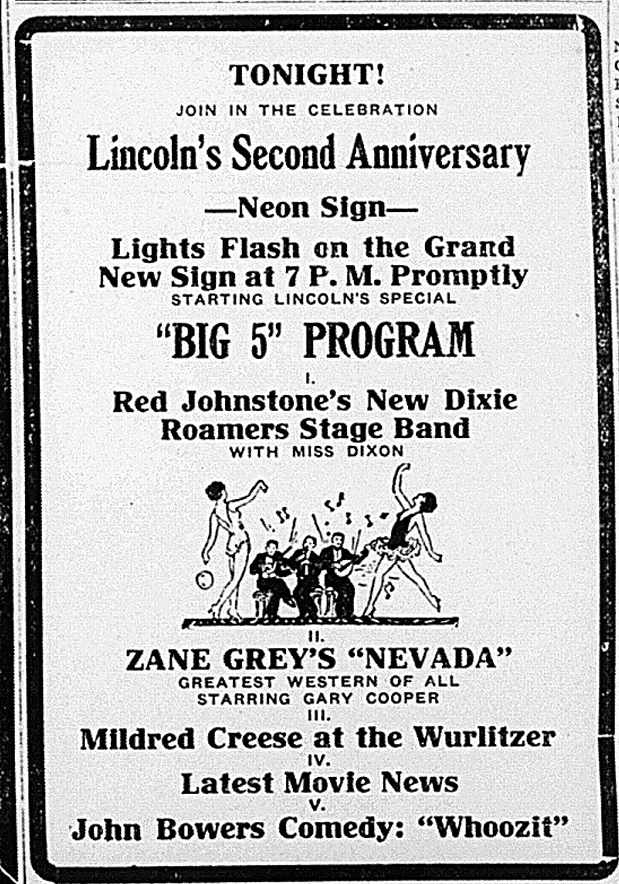
Waldo Ives had neon blade signs installed on the Lincoln and Empire. The Lincoln sign was lit May 1928 to celebrate the Lincoln’s second anniversary. In November 1928 the need to invest in sound systems and new projectors became real. Paramount Studios announced plans to build new ‘talkie” theaters in Anacortes and Mount Vernon. Ives was forced to invest to support sound in the Lincoln and Empire. He left the Mission and Rex as silent houses.
In February 1929 the Lincoln showed the first talkie in Skagit County, “In Old Arizona.” The Paramount Theater (Lido as of 1953) opened in early March 1928. There was 4 months of fierce competition between the Paramount and the Lincoln with the Paramount offering ample parking and giveaways of dinnerware.
The Paramount closed as a result of unpaid bills to FoxPacific Theaters. Waldo Ives took over the furnishings and the lease to the theater in July 1929. Later that same month FoxPacific bought into the Anacortes and Mount Vernon theater chain Waldo and his father controlled. The Mission (Lyric as of 1953) and Paramount (Lido as of 1983) were both closed and remained so after the stock market crash in October 1929 as the economy sank to the depths of the Depression in 1932-33. The Ives bought back the Fox interest in June 1931, presumably so they had more freedom to program films.
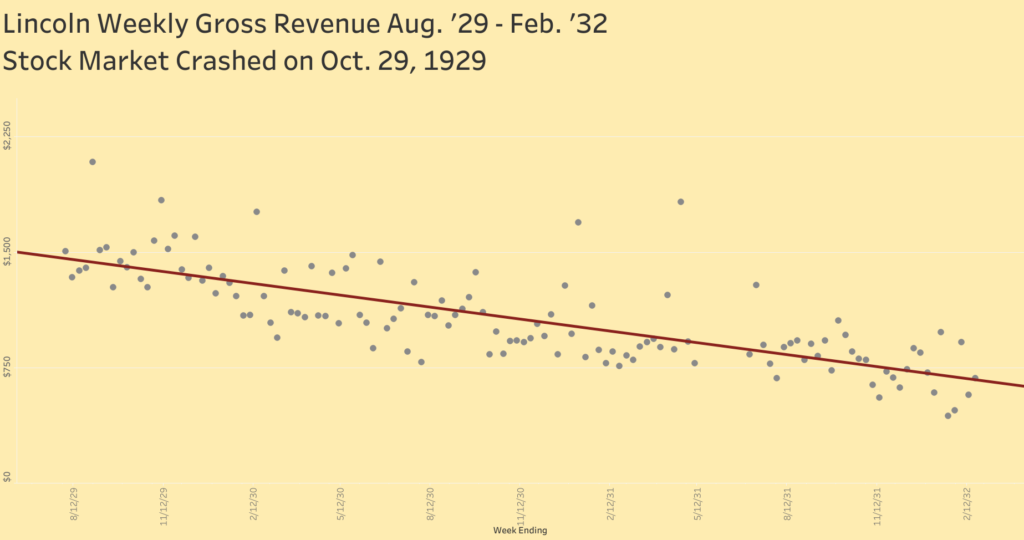
Weekly revenue at the Lincoln tanked as the Depression progressed, even with the two other theaters in Mount Vernon closed. Even with no competition, the Lincoln’s weekly receipts fell from $2,084 on September 1,1929 to $682 on February 1,1932.
As revenue dropped the Ives ran afoul of the City of Mount Vernon, paying only a portion of their Business License fee. By the time Waldo Ives turned over the keys to the Lincoln on April 22, 1933 he owed two month’s rent and ten months of utility bills. He was sued by the building’s Seattle owners Elden W Pollock, his wife Alice Decatur Pollock and her sister Edith Decatur for the balance of the 15 year lease. (The weekly gross numbers document is the only surviving evidence from that court suit. Lucky us)
Waldo Ives opened the Mission (Lyric as of 1953) with the projector and sound equipment he had used at the Lincoln. Within a week he committed to reopening the Paramount (Lido as of 1953).
EW Pollock tasked his son, Eldon D Pollock, also of Seattle to reopen the Lincoln, putting the Pollock family in the film exhibition as well as theater building ownership business.
What was being shown on stage and screen as theaters opened, closed and changed hands?
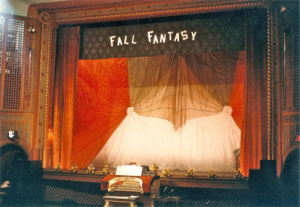
- Fashion and style shows featuring wear from Mount Vernon merchants were spring and fall staples. The Wurlitzer accompanied each show.
- A Mickey Mouse club was formed at the Lincoln from 600 to 700 child matinee in December 1930.
- Swedish films began showing in early April 1932. They began regular play, sometimes as often as once a month through the 1940s.
- Live local and touring acts performed. The Elks produced a wrestling match on the Mission stage in late May 1932.
- Cooking schools live, or on film continued as a staple in Mount Vernon theaters, having started in 1924 at the Mission.
- A film in praise of sugar beets as a crop was shown at the Lincoln in March 1931.