1000 words, a 5 minute read
Closing in 1984 was rock bottom for the Lincoln. From 1986 it was rescued and rehabilitated to become the dynamic community asset and treasure it is today. Volunteers repaired the Wurlitzer, cleaned trash, wrote grant applications, raised funds, and secured historic designation for the building.
In 1984 the movie exhibitor, Dick Babington, stepped away from the Lincoln after 5 patrons attended his last movie showing. Unable to compete with the two multiplexes on College Way, Babington told the Mount Vernon Argus he would “…never go back to theater work unless ‘I can get a six-plex to run.'”
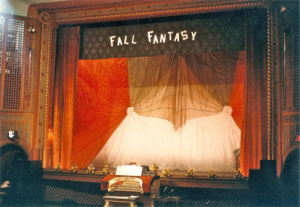
Operation of the Lincoln returned to another generation of the Pollock family, Ed “Eddie” Pollock, one of Elden D Pollock’s sons. As the manager of the Lincoln Eddie had booked some live acts such as bluegrass icon Doc Watson in 1983. He supported a group of volunteer theater organ enthusiasts in their unpaid efforts to rescue and rebuild the Lincoln Wurlitzer. The work started in earnest in 1977 and continues to this day. The effort, and subsequent volunteer work resulted in the instrument we enjoy today. It is also a forerunner of the work of all subsequent volunteers saving the Lincoln and its Wurlitzer.
The Lincoln under Eddi Pollock began a program of second run movies at rock bottom prices, live variety shows, and the Lincoln Opry – billed as Mount Vernon’s own “Grand Ol’ Opry.”
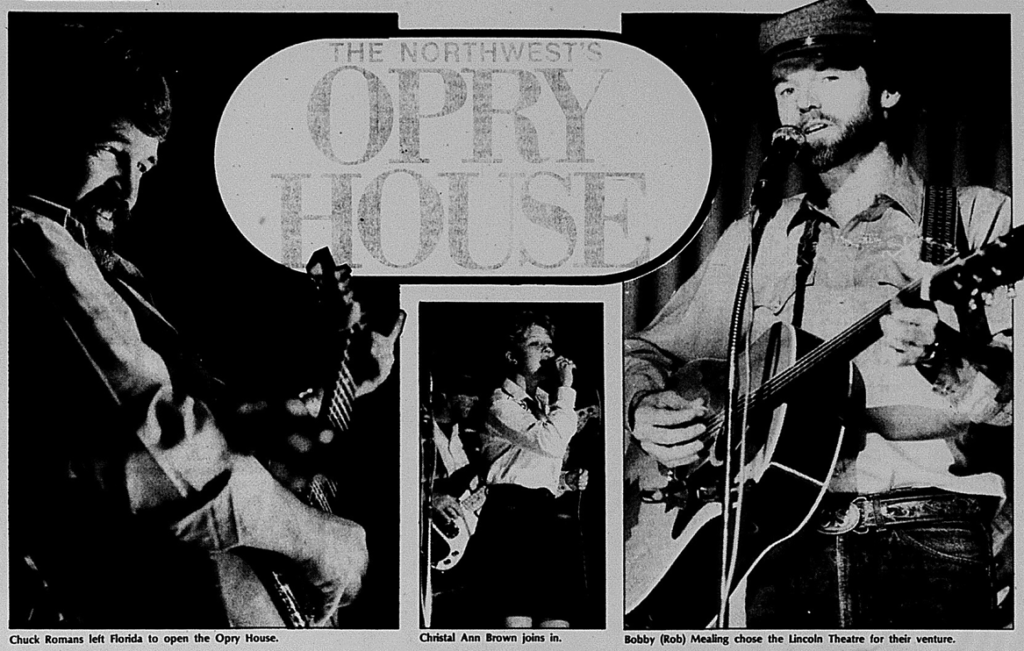
Eddie Pollock died at age 36 in early 1985. He was lauded In an obituary in the national theatre organ magazine as making”…the theatre and Wurlitzer … always open to anyone who wanted to come in and play. When the Peace Arch Organ Society was founded in 1983, the theatre was always available for concerts or meetings, and Puget Sound Chapter could also meet there when they desired.”
Newspaper ads for movies and live acts at the Lincoln grew fewer and further between after 1985 until they disappeared in 1986. This mirrored a general declined of downtown Mount Vernon which felt the pinch of malls offering free parking. The merchants pressed the City Council to cut down 500+ parking meters in order to better compete.
John and Gretchen Pickett made a number of purchases of distressed downtown properties during this period. One was the Lincoln. Gretchen recounted that as she stood in the theater, organ volunteer Jeff Fox treated her to an impromptu Wurlitzer concert. That moment and her commitment to supporting performing arts led to a gathering of interested volunteers in October 1986. The group was advised that securing landmark and historic building status and operation by a non-profit was the best structure for securing funds for all the needed rehabilitation.
In September 1987 the Lincoln and Pollock Buildings were declared a state landmark as a result of an application by the newly created Lincoln Theater Center Foundation. State recognition was a requirement for placement on the National Register of Historic Places, which was granted November 5, 1987.
A flurry of grant writing, volunteer repairs, fundraising and an increasing pace of live performances followed through the late 1980s. A separate post is planned with a detailed list of physical improvements to the theater from the eighties through the present. By 1990 there were 4,000 patrons for films, live classical music, jazz, flamenco dancers, and the Miss Skagit Pageant among other shows.
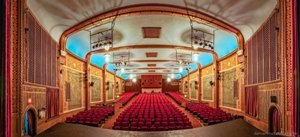
The original vision of the Picketts’ and the Foundation was of a performing arts center for the entire county. By 1988 the Mount Vernon High School had reduced the seating of their 700 seat auditorium by enclosing the balcony for classroom use and the rows under the balcony for administrative offices. This left the Lincoln as the largest performing arts auditorium on the mainland. It was not all high art. Fashion shows returned to the Lincoln. Children’s programming was added. Music groups playing Celtic, alt-country, and Cajun music all performed. A touring company of “Ain’t Misbehaving,” appeared in 1997. The MVHS Holiday Concert moved to the Lincoln. By 1998 there were over 200 events at the theater, many of them classic or foreign films. By 1999, attendance at the Lincoln was 40,000 patrons – ten times that of 1990.
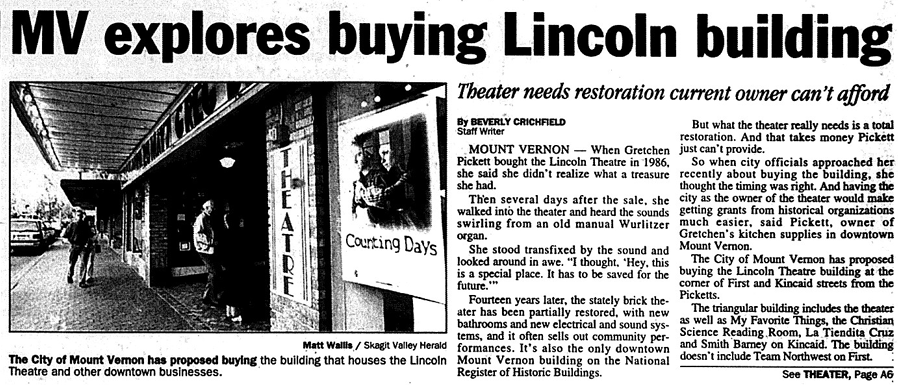
The City of Mount Vernon agreed to buy the Lincoln and wraparound Pollock Building in 2000, with the deal closing in 2001. The move facilitated a $500,000 state grant for repairing the facade. With confidence that the future of the Lincoln was assured the Foundation was spurred on to replace seating and make other larger expenditures in the Act II campaign.
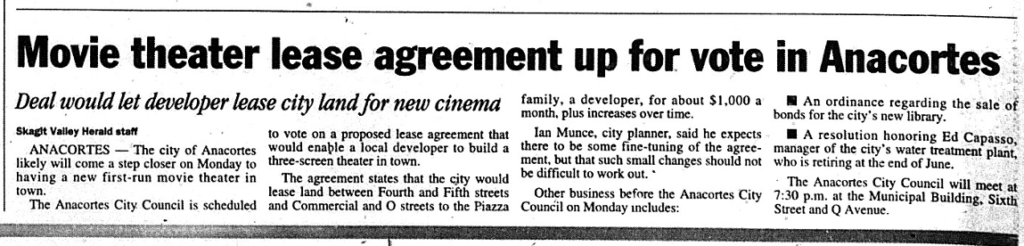
There was a parallel effort by the City of Anacortes to secure a local movie house in that city. Both city’s efforts were in the face of recently opened 14 screen multiplex in Burlington which had closed all other local movie houses.
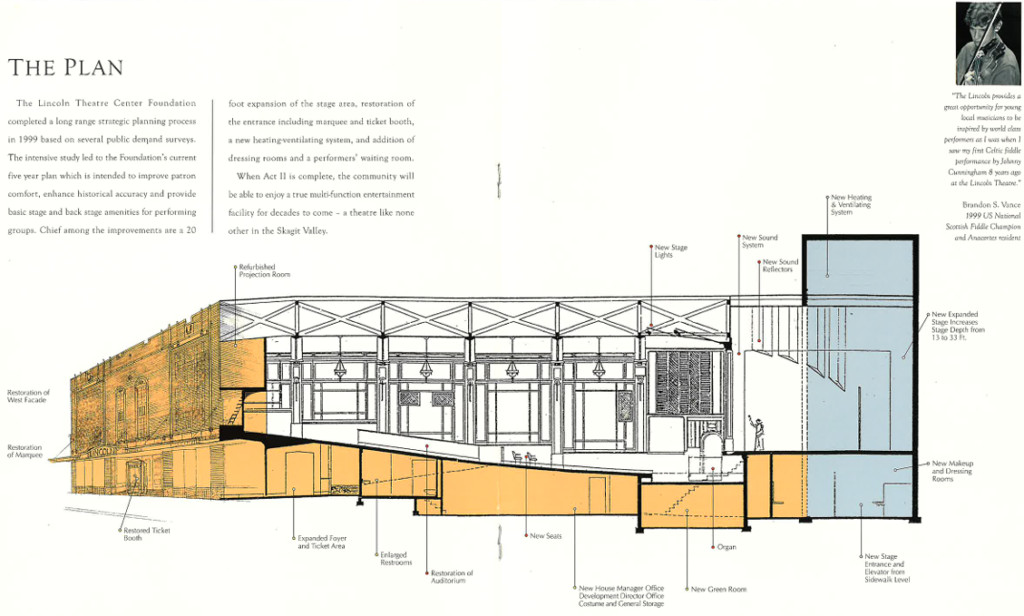
The major repairs at the Lincoln went ahead, the state grant was spent. A major fundraising appeal, Act II, was launched March 200, to improve the lobby, seating, stage and HVAC. All but the HVAC was accomplished. A copy of the conceptual plan is below.
Bud Norris succeeded the Mount Vernon mayor who had championed the purchase, Skye Richendrfer. In 2006 Norris proposed selling the Lincoln. The Foundation did not have the funds to purchase the building and organized a campaign to retain city ownership. There was an outpouring of support in the newspapers and at city council meetings. The proposal to sell failed.
Since that time the Lincoln has continued to be central to the revitalization plans of downtown Mount Vernon. It is located at the intersection of First Street and Kincaid Corridor improvement plans. The theater has upgraded to digital projection, improved sound and lighting, recarpeted, upgraded the bathrooms and lobby, and created a flexible thrust stage/seating/dance floor implementation that supports relatively quick transformations to meet performer needs.
In mid 2026 the Lincoln will be closed to add a fire suppression system and upgrade the heating and air conditioning system. The latter project will clear space and headroom in the basement allowing them to be built out as a class or reception area.